
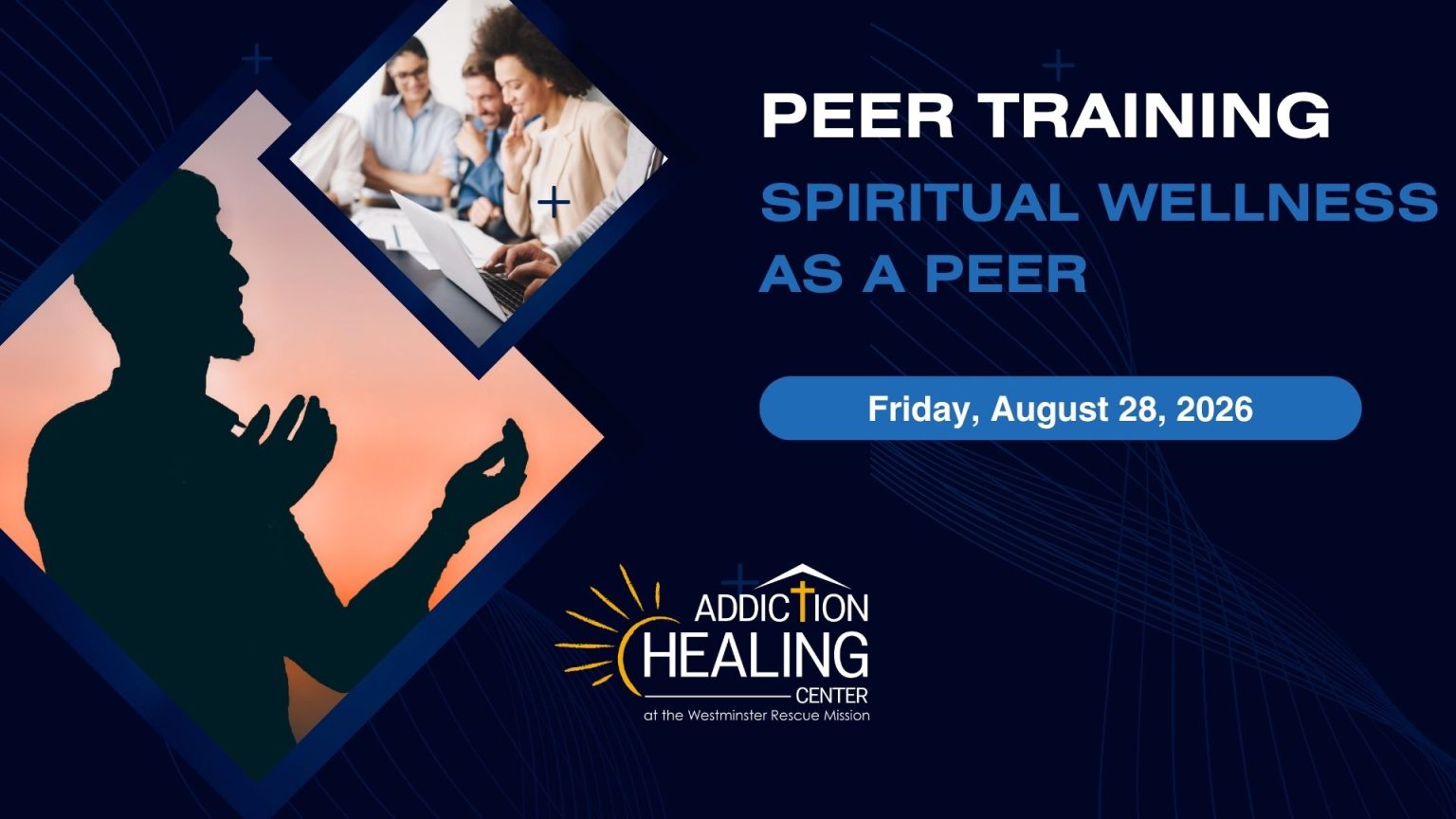
Thank you for registering for Spiritual Wellness as a Peer!
You should receive a confirmation email at the address you used to register in the next 24-48 hours with this information. If you do not see it after 48 hours, please check your spam folder.
| Spiritual Wellness as a Peer August 28, 2026, 9 am - 4 pm Addiction Healing Center at Westminster Rescue Mission658 Lucabaugh Mill Road Westminster, MD 21157 Total CEUs: 6 Training Hours by Domain: Recovery and Wellness - 4 CEUs; Mentoring and Education - 2 CEUs Applies to Certification: Certified Peer Recovery Specialist (CPRS) NOTE: A one-hour lunch break will be provided. Several restaurants are located within 5–10 minutes of the venue, or you are welcome to bring a lunch to enjoy onsite. |
You will be contacted by the instructor via email approximately one week prior to the training to finalize the Training Agreement through The Maryland Addiction and Behavioral Health Professionals Certification Board (MABPCB).
If you have any questions or need to cancel your registration, please email AHCPeerTraining@WestminsterRescueMission.org.
Please note: There will be a one-hour lunch break. You can pack a lunch and eat on campus or drive to one of several nearby restaurants.
What is Spiritual Wellness as a peer? Overview: One-day curriculum for peer recovery coaches to explore spiritual wellness in recovery, reflect on personal beliefs and biases, and practice supporting diverse faith and belief pathways with compassion, openness, and appropriate boundaries. Learning Objectives: By the end of this training, participants will be able to:
|